


Are Poppers legal in the Netherlands and other countries: what does the law say?
Navigating the regulations surrounding recreational substances in the Netherlands can be complex. One product that often causes confusion is Poppers. This liquid substance, known for its fast and short-lived effects, is used in various circles. But is it legal, illegal, or is it in a grey area? This blog offers a clear answer to the question about the legality of Poppers in the Netherlands. We discuss the legislation, the associated risks and how to use it responsibly.
What are Poppers?
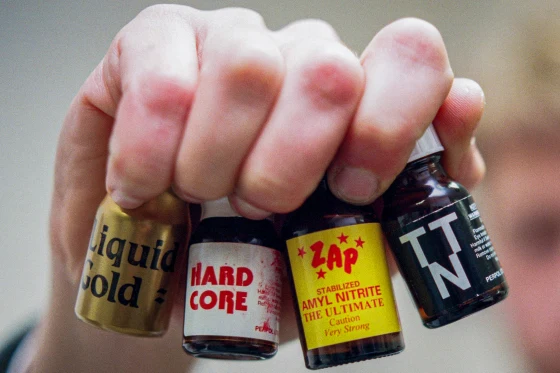
Before we look at the legal status, it is useful to understand what Poppers are. It is a volatile liquid in a small bottle. When the vapours are inhaled, they cause an immediate wave of heat and muscle relaxation. This effect, which usually lasts only a few minutes, leads to a short, intense intoxication and a feeling of euphoria. This sensation makes it popular in nightlife and intimate situations.
These substances, chemically known as alkyl nitrites, originally had a medical function. They were used to treat symptoms of angina pectoris (chest pain). Today, their use is almost entirely recreational, aimed at a brief moment of relaxation and enjoyment.
Dutch legislation on Poppers
The legality of Poppers in the Netherlands cannot simply be answered with ‘yes’ or ‘no’. The status depends on the specific chemical composition of the product. Poppers is an umbrella term for several types of nitrites, and the law distinguishes between these variants.
The original Poppers based on pure amyl nitrite are covered by the Medicines Act. As this type is not registered as an official medicine, its free sale is prohibited. Thus, its sale and possession without a doctor's prescription are illegal. This is why you won't find this particular strain in shops.
Other variants, such as those based on pentyl nitrite or isopropyl nitrite, are covered by the Commodities Act. This act regulates consumer products and sets requirements for safety, packaging and labelling. Poppers that meet these requirements may be legally sold and bought in the Netherlands. So the key to legality lies in the ingredients.
Are Poppers legal to sell and use?
So the answer is nuanced. The use and possession of Poppers covered by the Commodities Act are completely legal for personal use. You need not worry about legal problems when buying a legal product. However, sales are subject to strict rules.
In 2001, certain types of Poppers were removed from physical shops such as smartshops. This caused a shift to the online market. Reliable online sellers ensure that their products comply with the Commodities Act by selling only Poppers with permitted nitrites, with correct labels and child-proof closures. As a consumer, you are safe as long as you buy from a seller who abides by the rules.
Risks and responsibility
Legality does not mean there are no risks. It is essential to use responsibly.
Health risks
The use of Poppers may cause side effects such as temporary headache, dizziness and rapid drop in blood pressure. Contact with skin may cause irritation or burns.
A very important risk is the combination with other drugs. Using Poppers and erection drugs such as Viagra at the same time is extremely dangerous. Both drugs dilate blood vessels, which can lead to a life-threatening drop in blood pressure.
Responsible use
If you decide to use Poppers, do so consciously. Always buy your products from a reliable shop or webshop. A professional seller can guarantee that the product meets legal guidelines.
Also check the packaging yourself. Does the label look professional and is the bottle properly sealed? Information about the contents and warnings should be clearly stated. This helps you avoid buying an illegal or harmful product. Use the drug in moderation and be aware of its effects.
Conclusion: so are Poppers legal?
Yes, Poppers are legal for use and possession in the Netherlands, provided they contain the authorised ingredients. They do not fall under the Opium Act, but are regulated as a chemical consumer product under the Commodities Act.
This means sellers have to comply with strict safety regulations, while you as a consumer have the responsibility to inform yourself properly. Be aware of the risks, respect the law and only buy Poppers through a reliable source. That way, you can enjoy its effects responsibly.
Frequently asked questions
Are Poppers illegal in other countries?
Absolutely, legislation varies from country to country. For example, in countries like Canada and Australia, Poppers are banned. Always check local laws when travelling.
As we ship throughout the EU, it is crucial that customers outside the Netherlands check local laws. Although Poppers are conditionally legal in the Netherlands, this may be different in other EU countries. Some countries have import bans or other restrictions. It is the buyer's responsibility to check whether the import and possession are legal in the destination country. We are not liable for legal consequences or confiscation by customs.
Can I have problems buying or using Poppers?
In the Netherlands, possession or use of legal Poppers for personal use does not normally lead to legal problems. Problems can arise if a product contains illegal substances or if a seller violates the Commodities Act. Therefore, choose your supplier carefully.
